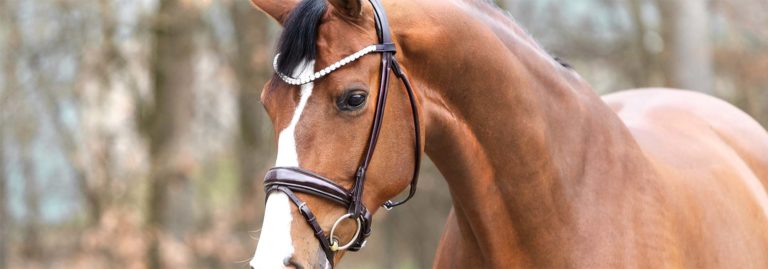
Every horse is unique – this applies not only to their temperament but also to their anatomical characteristics. This is precisely why horses respond differently to aids and, consequently, to different bridles.
In our four-part blog series, we’ll walk you through what to look for when choosing the right bridle. In this post, we’ll focus on the anatomy of the horse’s head, particularly the areas where the bridle rests. This is because the wrong choice or an ill-fitting bridle can lead to unhealthy pressure and subsequent damage.
A step back – just how individual are horses?
Every horse has its own unique anatomy, which affects how the bridle fits. Let’s take a look at the key factors:
The Skeleton
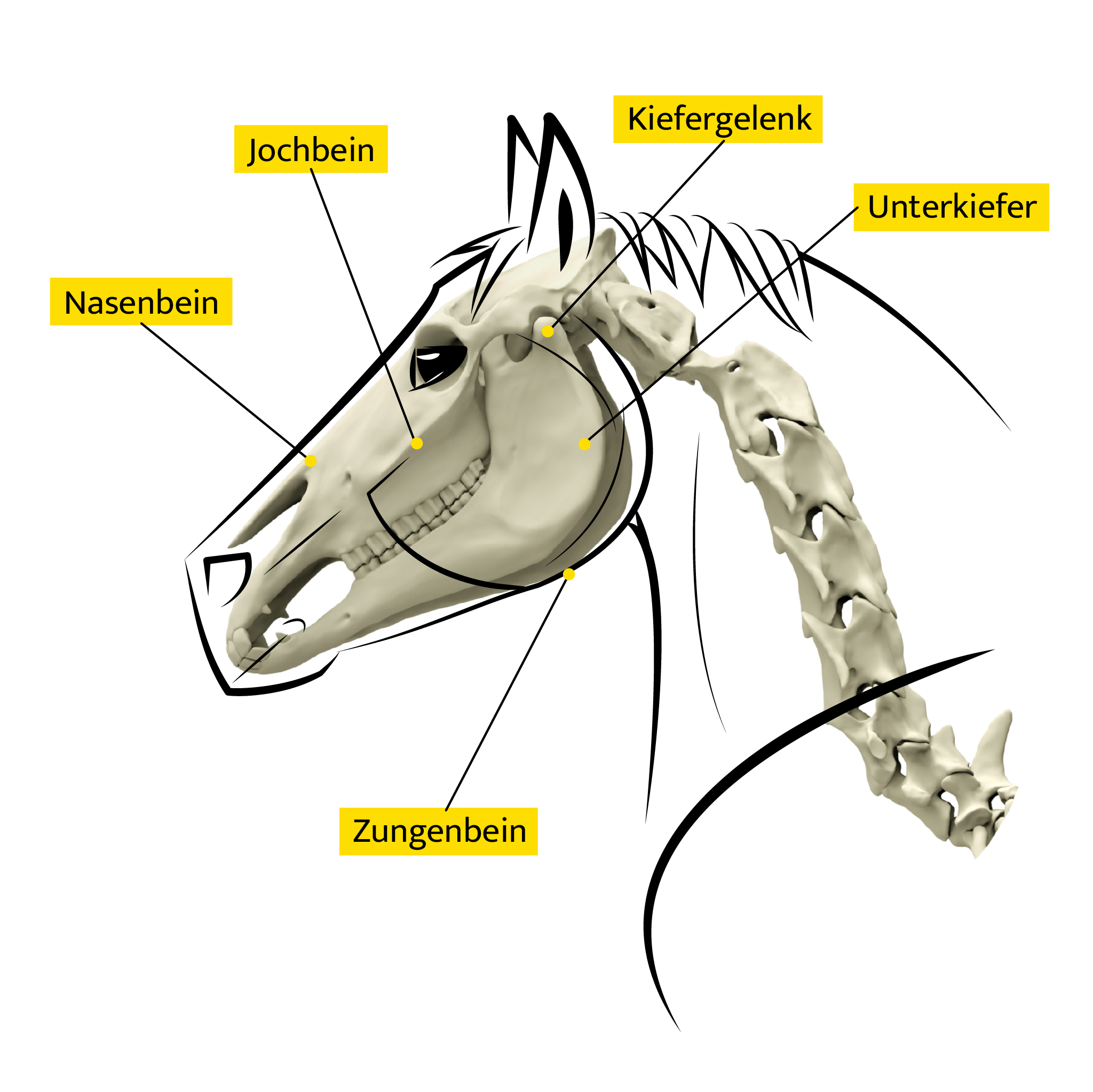
The length and width of the nasal bone vary from horse to horse and affect the contact area of the bit.
The position of the cheekbone helps to determine where the straps rest.
The size of the jaw affects the range of movement in the mouth.
The whole body
The larger and taller a horse is, the more effort it has to exert to move actively. This effort also affects the bridle.
The headpiece varies from horse to horse – sometimes narrower, sometimes wider, sometimes longer, sometimes shorter. This plays a major role in choosing the right bridle.
Mobility
Some horses move effortlessly, whilst others find it more difficult. A suitable bridle provides good support in this regard.
Is a horse more refined and agile, or more clumsy and heavy-footed? Both factors influence the choice of bridle.
Character traits
Some horses are extremely sensitive, whilst others are rather unresponsive.
There are horses that react negatively to certain types of pressure.
What is your riding style like? Is it sensitive and precise, or rather imprecise?
The Skeleton – The Basics
The horse’s conformation is the basis for choosing the right bit. Some particularly important factors to consider are:
Lower jaw: The lower jaw needs sufficient freedom of movement. This is the only way to achieve balance and relaxed muscles.
Temporomandibular joint: Tense tongue and masticatory muscles exert pressure on the temporomandibular joint. This can lead to stress and affect the neck muscles – with negative consequences for the rider’s aids.
Hyoid bone: The hyoid bone is connected to the temporomandibular joint and, ultimately, to the skull via fascia and muscles. It influences the entire masticatory system and helps to activate the abdominal muscles as well as the hind legs.
Nasal bone: The nasal bone becomes thinner towards the tip and is therefore more sensitive. There is a risk that this may cause uncomfortable pressure on the open airways.
Cheekbone: The cheekbone is an attachment point for the masticatory muscles and lies close to important nerve pathways and sensitive areas.
Areas that are particularly sensitive to pressure
There are areas on a horse’s head that are particularly sensitive to pressure. You should take a close look at these:
- Genick: Every strap exerts pressure. It is important to pay close attention to how the pressure is distributed.
- Bridge of the nose: The bridle rests directly on the bone; the lower it sits, the more sensitive it is.
- Cheekbone: This is where maximum pressure is exerted on the bone, again without any padding.
- Lower jaw: Bridles always run over the lower jawbone. Particular care is required with redirecting rollers or low-set bridles.
- Eyes: Headbands that are too tight put pressure on the eye area.
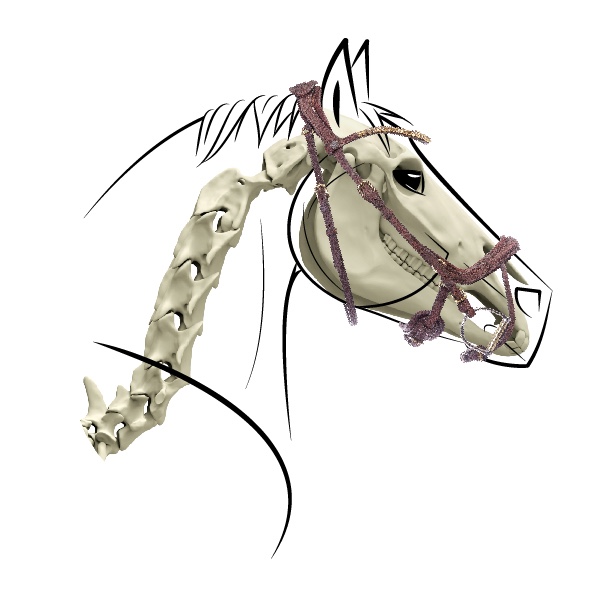
The correct fit of the bridle
- A neck strap that allows plenty of freedom of movement for the ears. Different types of neck strap are used depending on the height of the mane crest.
- Located behind the cheekbone; just behind it (about 1 finger’s width)
- A distance of two finger-widths below the cheekbone
- The seat should not be too low, so as not to restrict breathing
- Make sure the seatbelts are not too tight
Nerve pathways – invisible but crucial factors
Nerve pathways are complex and are often located in the area of the bridle. And here, too, individual differences come into play: nerve pathways are never identical in all animals. To make matters more difficult, nerve pathways are not visible and therefore cannot be felt in the same way as bones. A few basics:
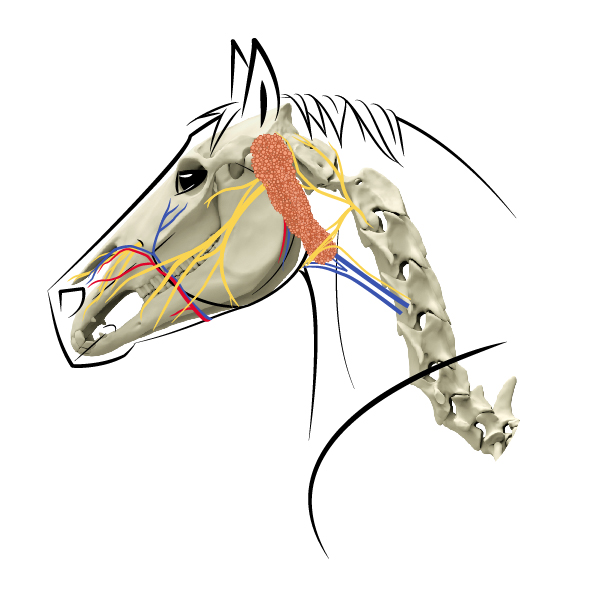
What are nerve pathways?
Nerves are responsible for sensory perception and muscle control.
The nerve centres are particularly important
This is where key nerve pathways emerge from the inside to the outside and have a significant influence on the sensitivity of the horse’s head. Areas particularly affected:
From just below the temporomandibular joint up to the nose: this is where the facial nerve, which controls facial expressions, begins.
The lower jaw area towards the nose: this is where the trigeminal nerve runs, which is responsible for sensory perception and the facial muscles.
The consequences of too much pressure on the nerves
Excessive pressure caused by an unsuitable bit affects the muscles throughout the horse’s body and can have serious consequences:
- Tension in the back muscles
- Pain
- Headshaking
- Stress on muscle tone
- Impairment of the musculoskeletal system
Many horse owners underestimate the impact of the bridle on the anatomy of the horse’s head. The bridge of the nose, the lower jaw and the cheekbones, in particular, are sensitive areas that are easily subjected to pressure. Even anatomical bits, which are designed to relieve pressure on the nerve pathways, are not always the perfect solution. Often, these too run parallel to the nerve pathways.
Our tip: Draw on the horse’s head with chalk:
- cheekbone
- Bridge of the nose, including the tip
- Start of the nostril holes
- Nerve pathways
This will give you a good idea of your own horse’s conformation and where uncomfortable pressure might arise. You’ll find that the position where a bridle sits is often fixed or cannot be adjusted at all. Some horses have enough ‘room’ for adjustments, but for many, the frame they provide is fixed and nothing else will do.
Stay tuned – in our next blog post, we’ll be introducing the different types of bridles!