A bridle must fit the horse’s head correctly, otherwise it can cause uncomfortable pressure points and, in the worst case, lead to long-term health problems. But with so many options available on the market, how do you find the right bridle for your horse?
Having examined the anatomy of the horse and its influence on the choice of bridle in Part 1/4 of our bridle series, in this article we’ll provide a more detailed overview of the most common types of bridle, explain the various pressure points and areas, and help you make the right choice.
The most well-known types of bridles in English riding
Before we look at the details of the individual bridles in the table, here’s a brief overview:

English bridle
This classic bit, which applies direct pressure to the bridge of the nose and the lower jaw, is ideal for providing precise aids in show jumping and eventing.
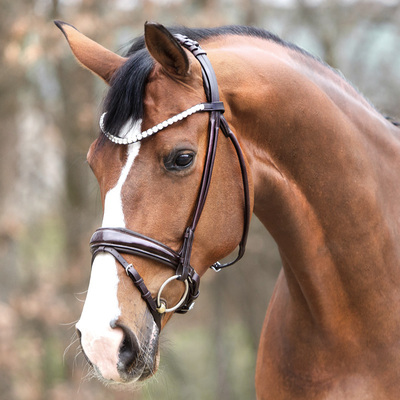
Swedish bridle
The guide roller in the chin strap distributes the pressure over a wide area. The gentle pressure helps the horse to sit up straight. This bridle is particularly suitable for dressage.

Mexican bridle
The crossed straps ensure even pressure distribution and maximum breathability. For this reason, the Mexican bridle is primarily used in eventing.

Hanoverian bridle
This bridle sits lower, thereby providing greater control over the horse’s mouth. It is particularly often used for horses that tend to move the bit around a lot.
A detailed look at the different types of bridles
| Type of bridle | Structure | Pressure distribution | Efficiency | Use | Conclusion |
|---|---|---|---|---|---|
| English / English-style combination bit | Direct chin fastening, usually with a slim fit | Pressure on the bridge of the nose, the lower jaw and the nape of the neck | Direct signals to the front or when braking | Particularly suitable for show jumping and eventing | This bridle is easy to fasten and allows you to give the horse clear instructions. |
| Swedish / Swedish-style combination bit | A pulley-style chin strap, wide noseband with soft padding | Covers the entire jaw; the pressure is not concentrated in one spot but is distributed around the horse’s mouth | Support affects the entire head, rather than just forward and backward movement | Used primarily in dressage | This bridle is useful if you want to bring the horse into collection or guide the horse into an upright posture. |
| Mexican bridle | Cross-fastening with a raised nose strap and an extended safety strap | Pressure distribution across several points: bridge of the nose, lower jaw, chin, nape of the neck | Gentle transfer of support, maximum freedom of movement | Frequently used in eventing | This bridle is particularly well suited to sensitive horses. |
| Hanoverian bridle | low noseband below the bit | Pressure is concentrated mainly on the muzzle and the nape of the neck | Provides clear support for the horse’s mouth, reducing restless movement of the bit | Suitable for show jumping, eventing and leisure riding | This bridle is ideal when there is too much slack around the bit and mouth. Please note: For horses with a long mouth only. |
Pressure distribution for the different types of bridles
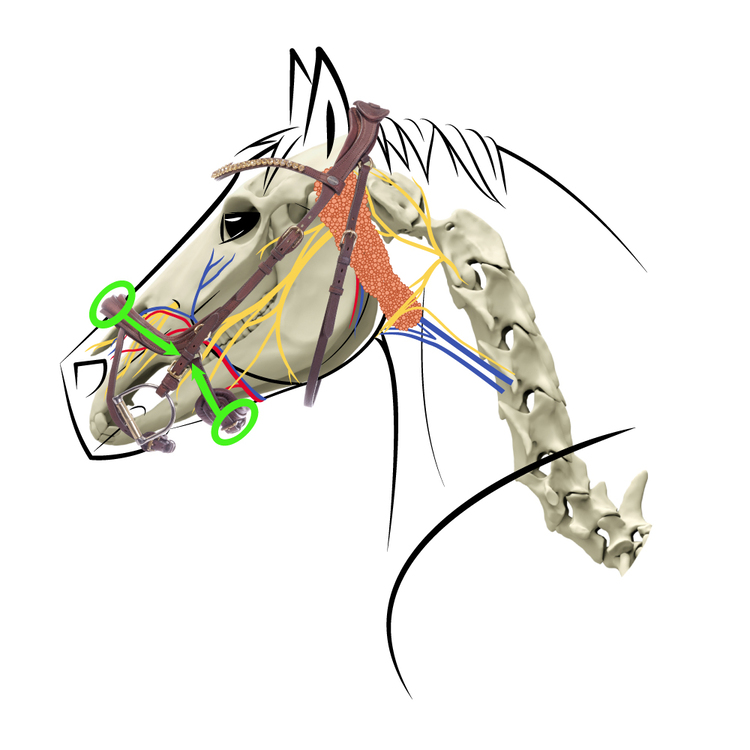
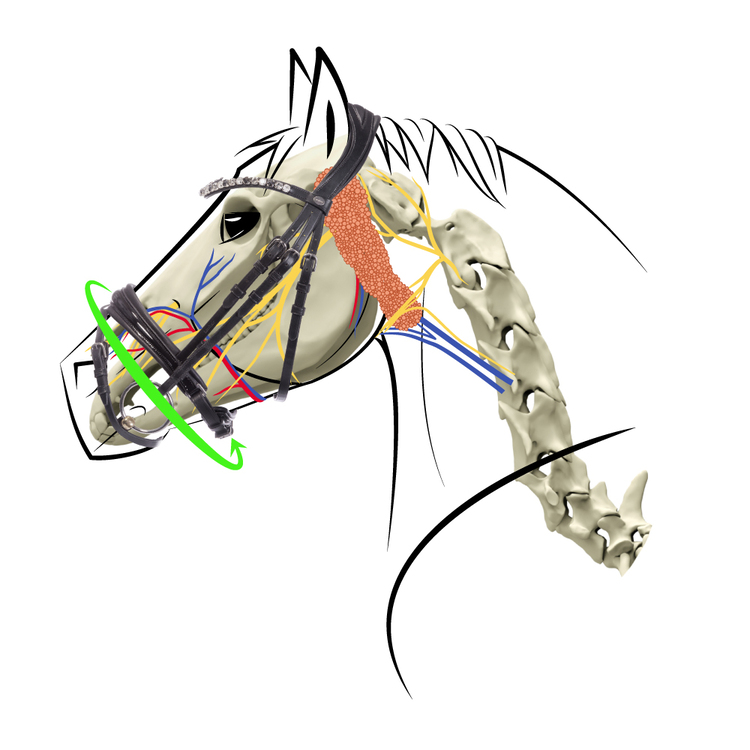
English bridle
Pressure is transmitted directly to the bridge of the nose and the lower jaw.
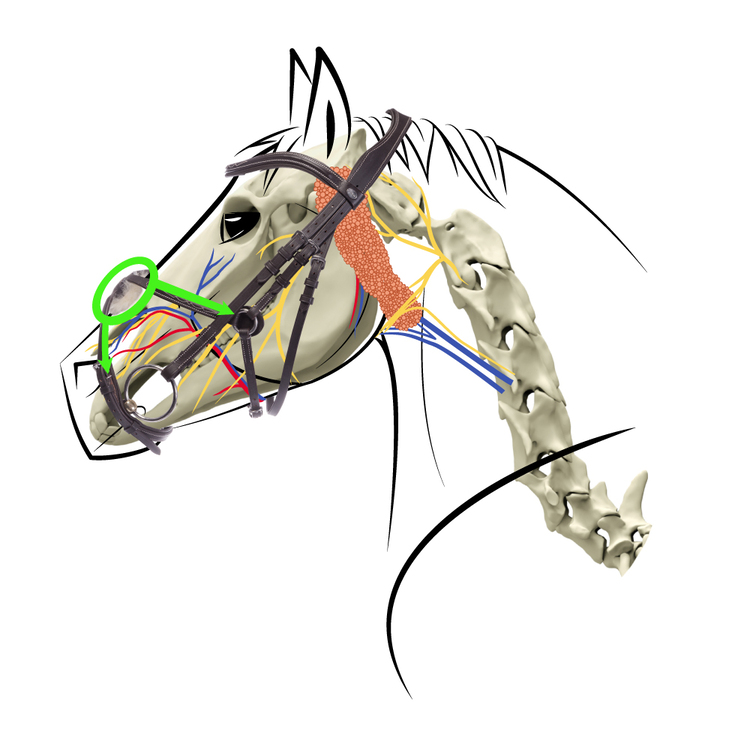
Swedish bridle
The pulley in the chin strap distributes the pressure over a wide area.
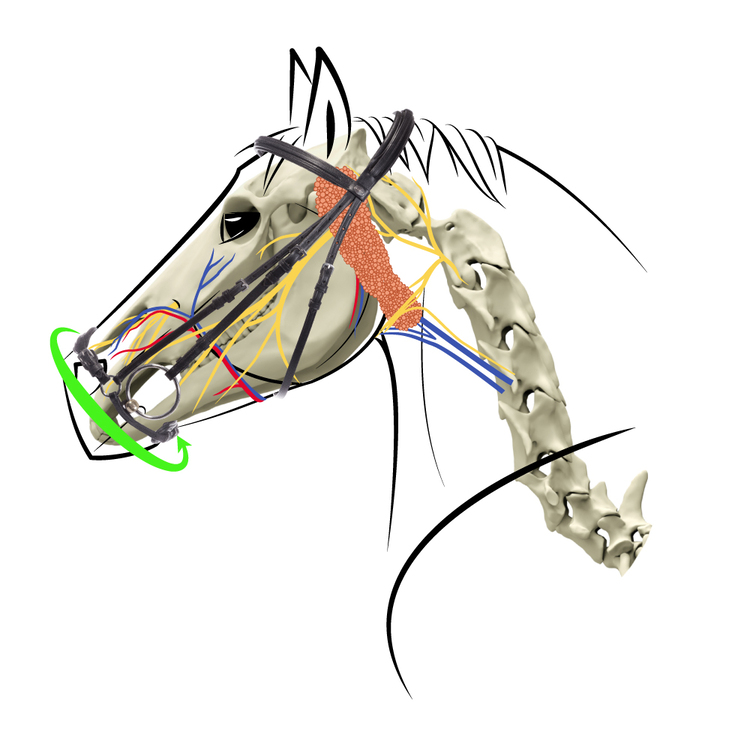
Mexican bridle
The criss-cross straps ensure that pressure is distributed evenly.
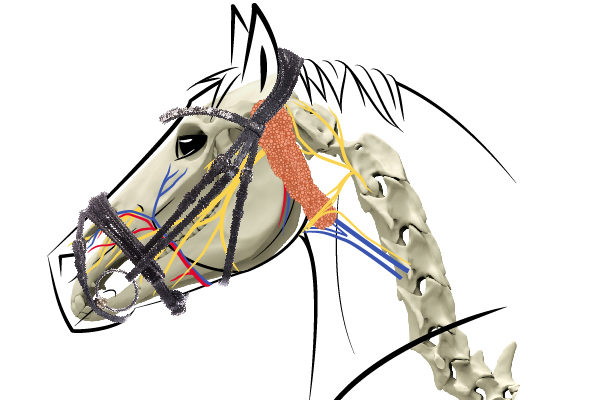
Hanoverian bridle
The low-set bit ensures that pressure is distributed evenly across the horse’s mouth.
Which bridle is right for your horse?
Choosing the right bridle requires a careful assessment of your own horse. You should ask yourself the following questions in this regard:
- Which discipline do I compete in? Dressage riders rely on subtler aids, whilst show jumpers often need more precise control.
- What is my horse’s build like? Anatomical factors determine which bridle fits comfortably and does not cause any pressure points.
- Does the bridle really fit properly? Bridles that are too large often sit too high and can cause localised pressure. Anatomical cheekpieces and their recesses then sit too low and restrict the ears’ range of movement. Side straps that sit too far back come into contact with the nerve pathways.
- What levels of intensity do I need? Do I want to provide precise support, or achieve a gentler, supportive effect?
- How sensitive is my horse? Sensitive horses often respond better to subtle pressure, whilst more robust horses need to be addressed more firmly.
Practical tips for choosing the right bridle
- Make sure that the locking straps can be removed. That way, you’ll remain flexible and can try out what works best.
- Soft, supple leather ensures good pressure distribution.
- Beveled chin straps reduce pressure on the temporomandibular joint
- Anatomical cheekpieces allow for greater ear movement and help the horse maintain its balance.
- Padding the noseband prevents direct pressure on the bone beneath the skin.
Summary of bridle types
The perfect bridle isn’t just a question of appearance, but above all of comfort and communication with your horse. Try out different models, take your horse’s individual needs into account, and find the best solution for you both to work together harmoniously.
Don’t forget to consider features such as angled throat straps, anatomically shaped neck pieces, good padding and flexible fastening straps – these often make all the difference!
In the next section, you can look forward to us introducing you to our favourite bridles.