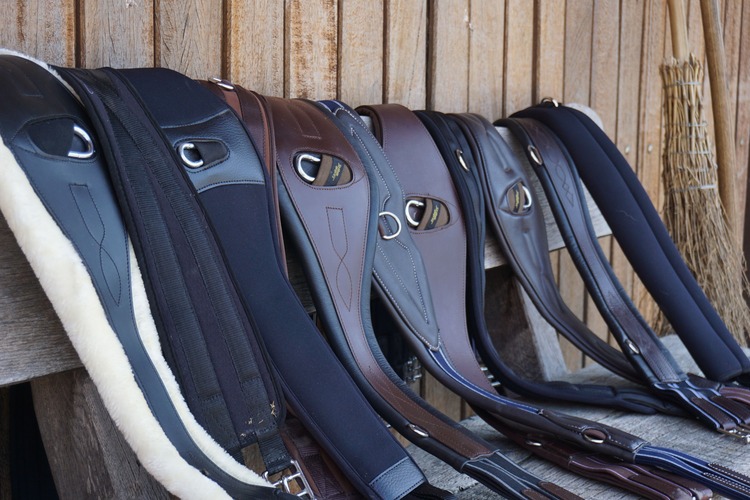
Saddle girths are an essential part of every rider’s kit. However, with so many options available, the choice can quickly become overwhelming. In the third part of our girth series, you learnt which girth shape is best suited to supporting your horse’s health and freedom of movement. But that’s not the end of what we have to say on the subject of girths. In the fourth and final part of our series, we’ll delve deep into the world of the materials used to make saddle girths. We’ll introduce you to the most common materials and highlight their specific properties to ensure you’re fully equipped to make the right choice. Look forward to fascinating insights and expert knowledge that will significantly enhance your riding experience!
Discover the top 4 materials for saddle girths
From traditional leather to modern synthetic materials – we’ll give you a comprehensive overview of the four most common types of material, their specific properties and the advantages each one offers.
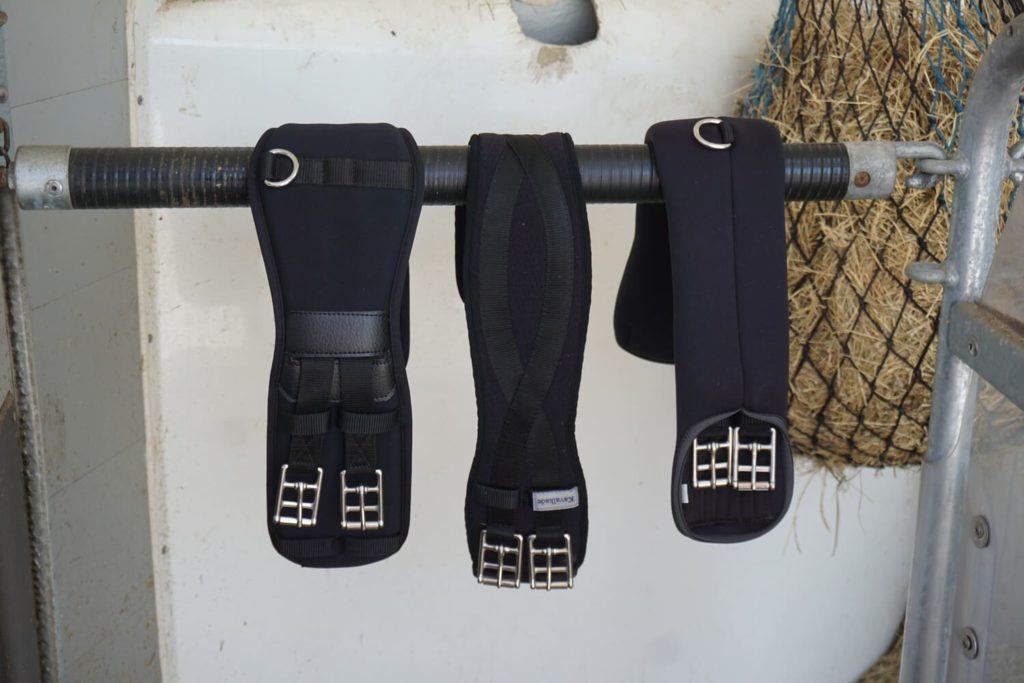
Textile saddle girths
Textile saddle straps, thanks to their lightweight and flexible material, offer a high level of comfort and freedom of movement. When well-made, they stand out for their soft texture. Standard textile straps are attractively priced and are mainly made from neoprene, memory foam or Klimatex.
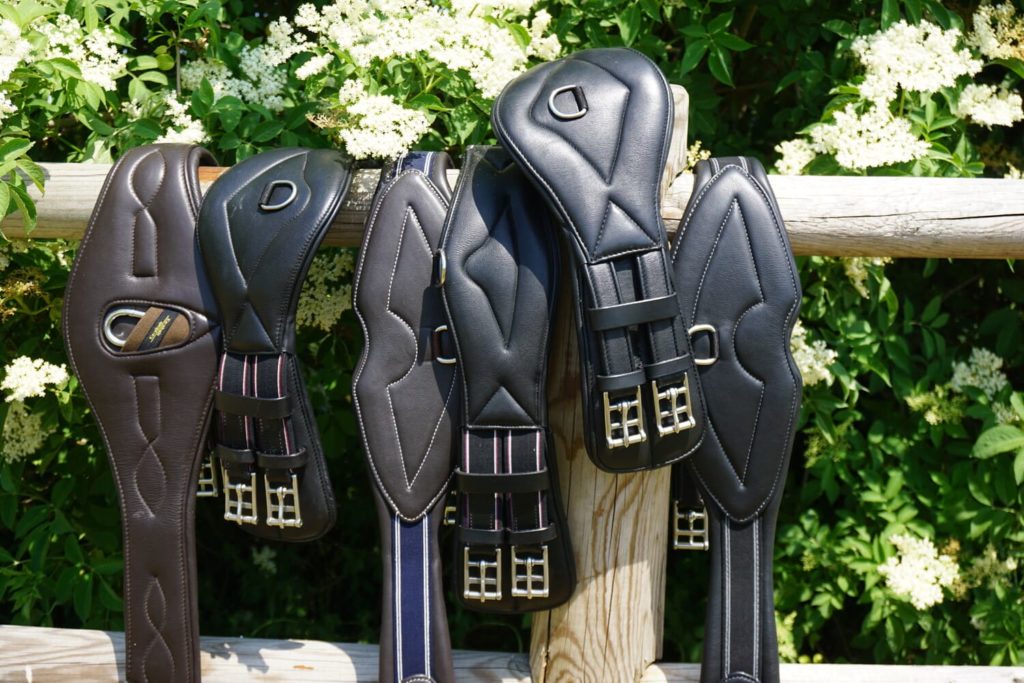
Leather saddle girths
Leather girths are durable when well looked after and are also a natural product. Over time, they mould to the horse’s body, ensuring a perfect fit. Leather girths are available in three varieties: soft leather, hard leather and oiled leather. Sometimes, two types of leather are combined.
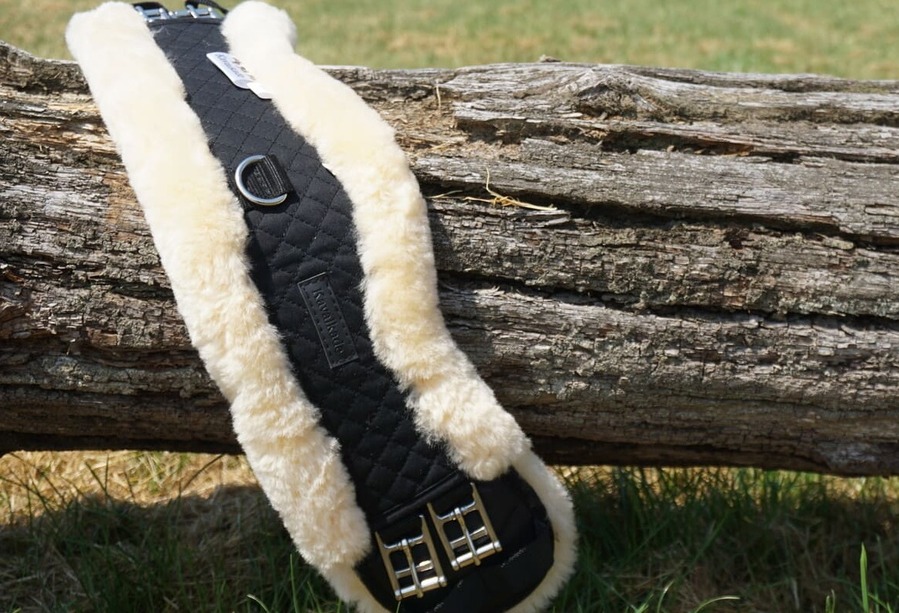
Lambskin saddle girths
Lambskin saddle girths offer a high level of comfort for particularly sensitive horses, as the soft material prevents chafing and pressure points. Thanks to its natural properties, lambskin is also breathable, temperature-regulating and hypoallergenic.
Faux fur saddle girths
Faux fur saddle girths combine soft padding with the low-maintenance properties of fabric girths. In most cases, the faux fur can be removed using a Velcro fastening and washed. They are also an excellent alternative for horses with an allergy to lanolin.
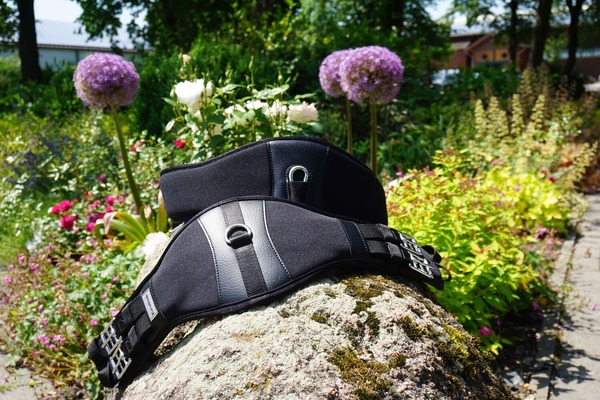
Textile saddle girths – versatile and easy to look after
Textile saddle girths are true classics and a popular choice amongst riders, as they combine comfort and functionality. In the past, there was essentially only the neoprene girth, which is sure to still be hanging in one riding stable or another.
Modern materials have since been introduced, made from hard-wearing nylon or synthetic fibres. These girths are lightweight, flexible and often machine-washable, which makes them easier to look after. Their soft texture minimises the risk of chafing and ensures even pressure distribution across the horse’s belly, which enhances comfort. Particularly worth highlighting are saddle girths featuring memory foam and Klimatex, which we have compared for you below.
Discover our neoprene straps here
Discover our Klimatex straps here
Discover our memory foam straps here
Memory foam vs. Klimatex
| Memory foam | Klimatex |
|---|---|
| + adapts to slight contours of the body | + breathable |
| + better pressure distribution and prevention of excessive pressure on the fasciae | + Prevention of heat build-up by wicking sweat away from the body |
| + returns to its original shape after use | + very light and soft |
| + very easy to care for and machine washable at 30 degrees | + very easy to care for and machine washable at 30 degrees |
| + smooth edges and good workmanship | + soft seam edges |
| – not very breathable | – firm pressure in the centre provided by a nylon strap inside |
| – firm pressure in the centre provided by a nylon strap inside |
Leather saddle girths – traditional and durable
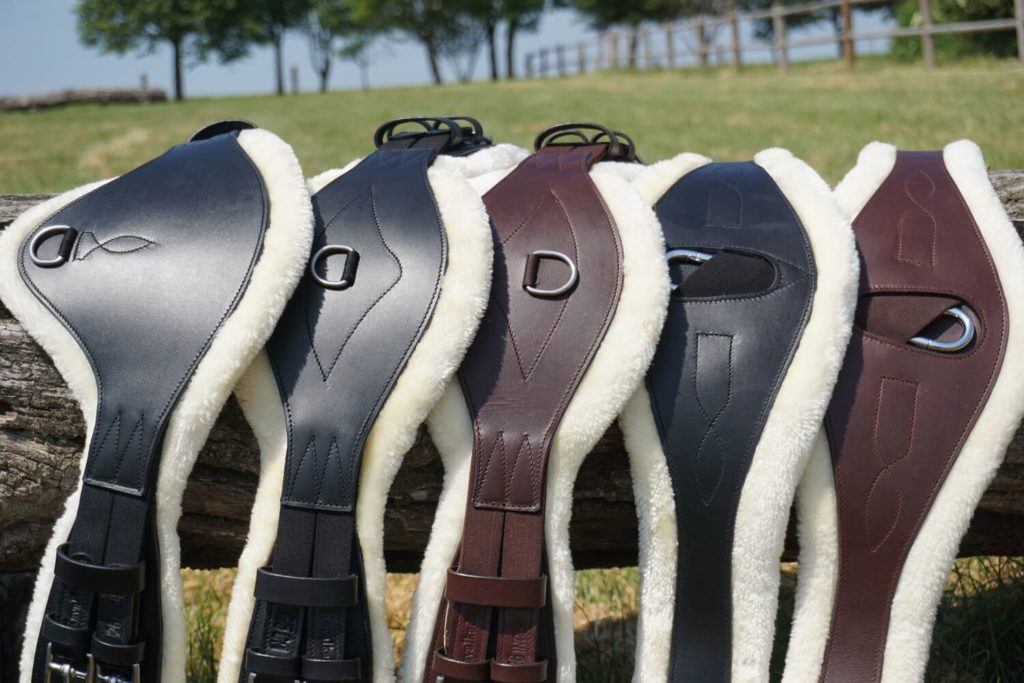
The leather used to make saddle girths is carefully selected and crafted by hand to ensure exceptional durability and reliability. With regular and proper care, leather saddle girths can be kept in excellent condition for years to come. Leather girths are available in traditional, plain or artistically decorated styles. Below, we’d like to give you an overview of the characteristics of the three most common types of leather.
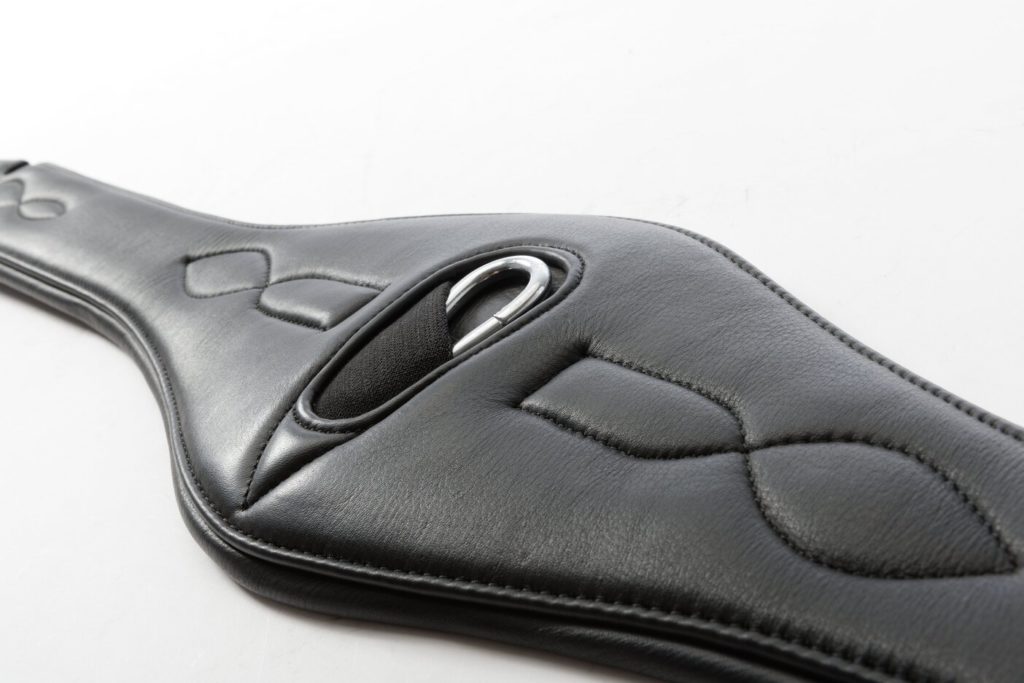
Soft leather
- Thin leather that has been processed and tanned until it is soft and pliable.
- Often used for padding or in areas where the leather needs to be particularly supple.
- In the case of dimensionally stable products, such as belts or stirrup straps, it is often reinforced with nylon.
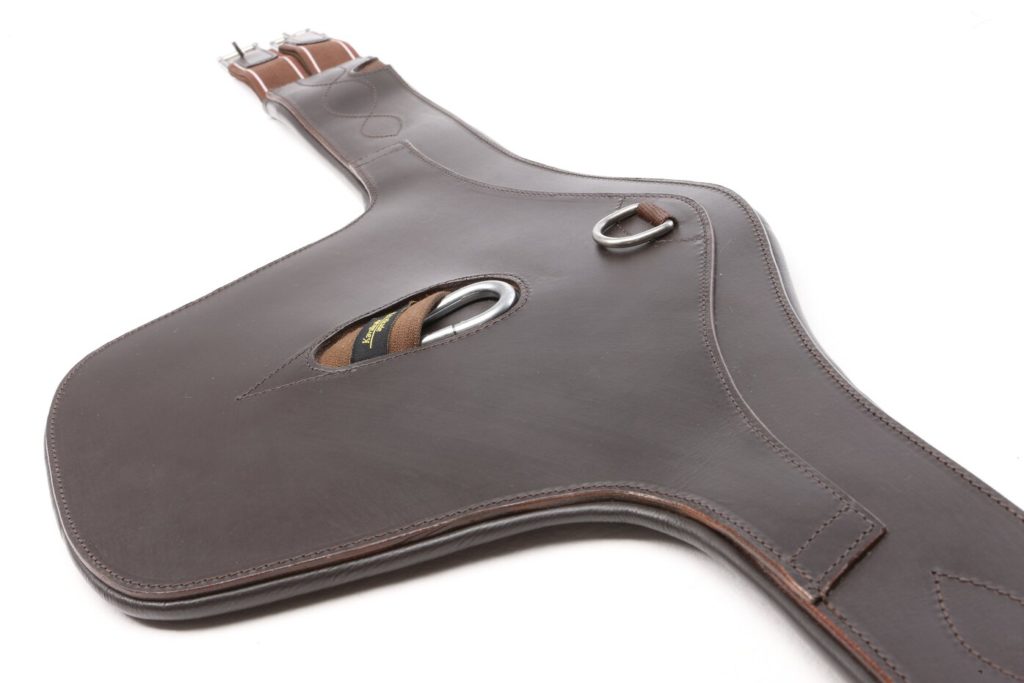
Hard leather
- Usually made from durable, robust and dimensionally stable full-grain leather.
- A sleek and elegant look.
- Fine-pored leather, which results in poorer absorption of care products.
- If smooth leather gets scratched, the scratches cannot be removed. The leather can no longer ‘heal itself’.
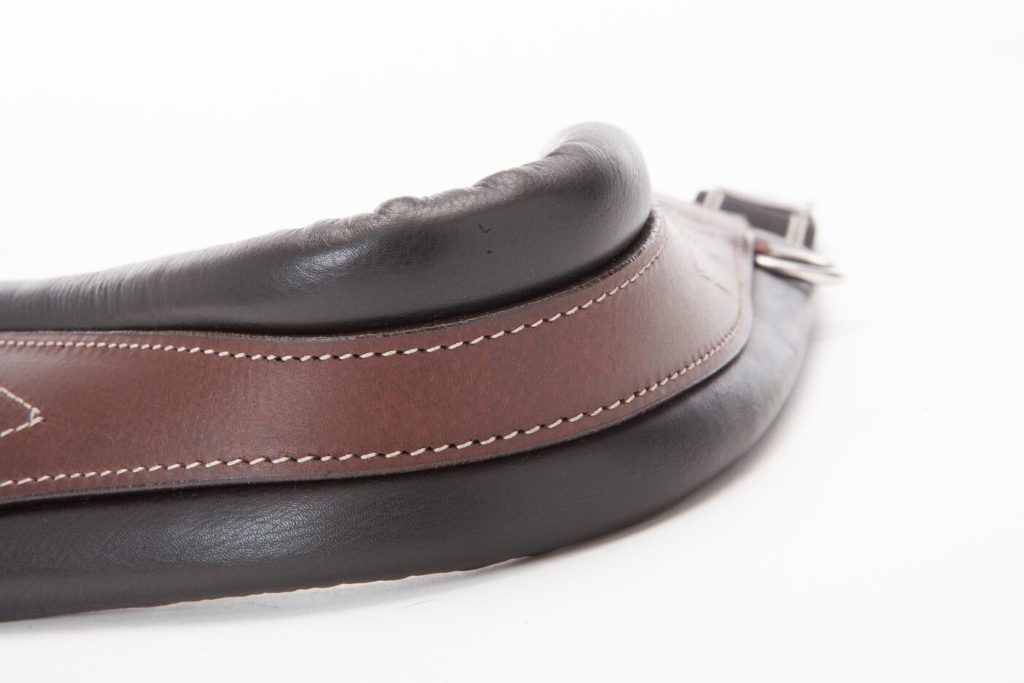
Oiled hard leather
- It is heavily greased during the tanning process.
- Textured, coarse-grained leather that withstands dirt and moisture and absorbs care products well.
- It does not dry out quickly and can heal itself to some extent.
- Very soft and adaptable
- A rustic look.
Lambskin saddle girths – natural and breathable
What makes lambskin belts stand out:
- Adaptable: moulds to uneven surfaces and reduces pressure points and chafing.
- Temperature-regulating: balances the temperature whatever the season.
- Breathable: thanks to a natural air cushion between the horse and the lambskin.
- Moisture absorption: Real fur can absorb up to 30 per cent moisture.
- Antibacterial: consists of 100% egg white proteins, which do not provide a breeding ground for viruses and bacteria.
- Balancing effect: promotes blood circulation and promotes relaxation.
- Shock-absorbing: the density of the coat creates a natural gap between the coat and the horse’s body.
- Self-cleaning: Dirt is repelled by the scaly structure of the wool fibre.
Discover our lambskin belts here
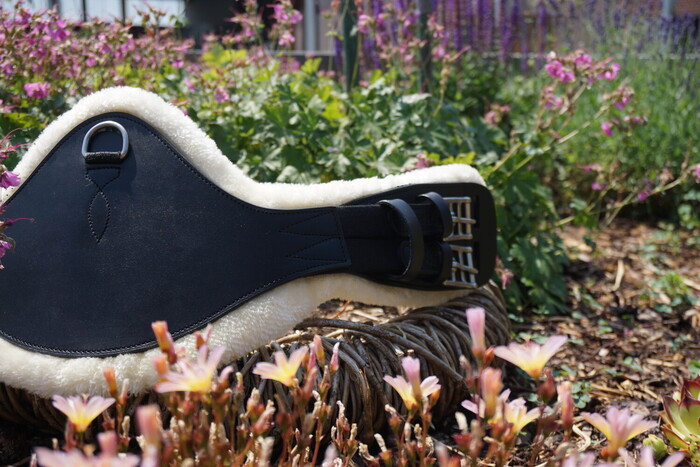
Faux fur saddle straps – practical and stylish
What makes faux fur belts stand out:
- Soft comfort: Reduces friction and pressure points.
- Non-slip: The texture provides improved grip.
- Hypoallergenic: does not cause skin irritation, even in sensitive animals.
- Easy to clean: easier to clean and look after than real fur.
- Retains its shape: keeps its shape even after washing.
- Stylish: available in a range of designs.
- Durable: hard-wearing and suitable for regular use.
Discover our faux fur belts here
In summary, it can be said that the materials under consideration offer various advantages and characteristics that should be taken into account when making a purchase decision. The focus should be on the horse’s well-being and needs, as well as the preferences of riders. In addition to the material, the quality, fit and functionality of the saddle girth should also be top priorities to ensure that you end up with the right product.