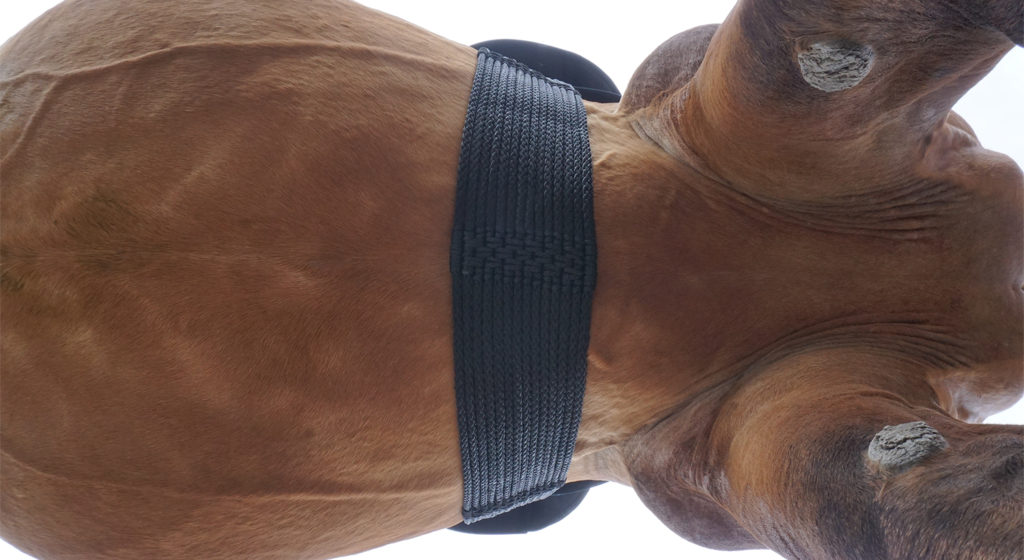
In the second part of our girth series, you’ve already learnt that every horse is a unique individual with its own physique, and what different horse types this gives rise to. We also provided an overview of the various types of girths and introduced you to the most common ones. You’re probably now wondering which girth is best suited to which type of horse. That’s exactly what we’re going to explain here. In the third part of our girth series, we’d like to show you which girth is best suited to optimally supporting your horse’s health and freedom of movement.
Finding the right girth for every horse
When it comes to girth designs, the market knows no bounds. New styles are constantly appearing on the market, promising benefits such as reduced pressure on the sternum, freedom of movement for the elbows and protection of the nerve pathways. Yet it doesn’t have to be that complicated. The key to choosing the right girth actually lies in the body shape of the horse in question. We’ll show you which girths are best suited to which types of horse and help you find your way through the jungle of products.
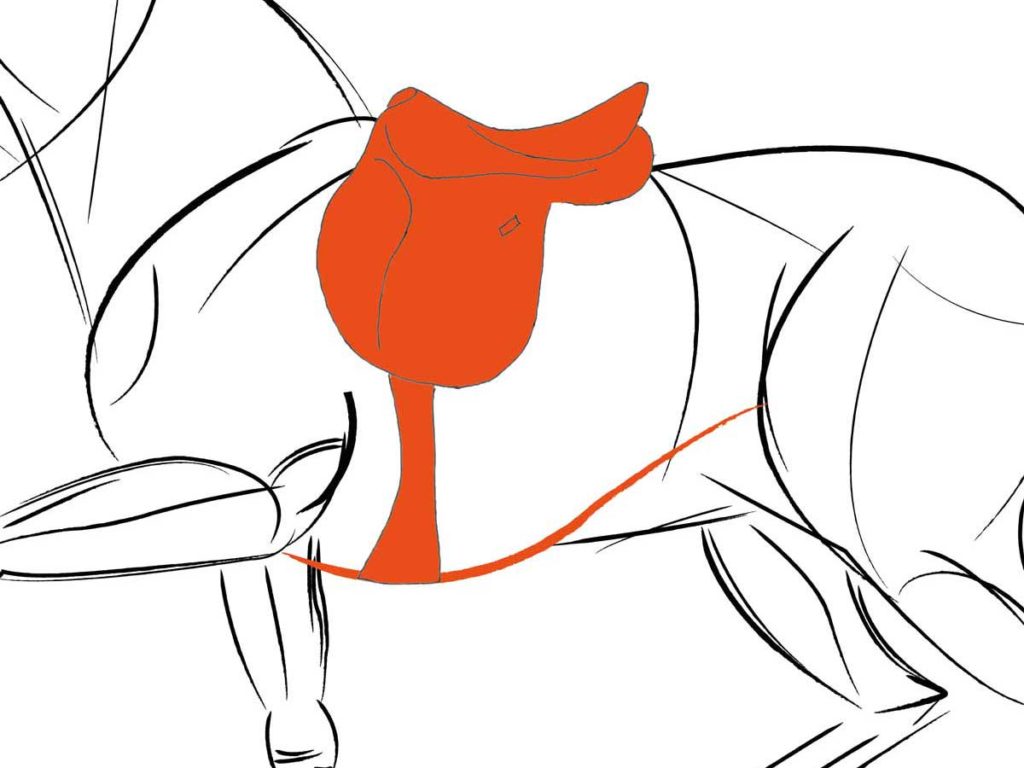
Horse type 1 = Asymmetrical saddle girth
Let’s recap: in this type of horse, the ends of the sternum and the ribcage slope slightly downwards, resulting in a slightly less pronounced girth line. The saddle girth slopes slightly forwards.
The advantages of the asymmetrical saddle girth
Due to the reduced width of the girth and the slightly downward-sloping rib arch, the pressure on the saddle girth is usually applied from behind and is transferred to the front edge of the girth. Uniform pressure distribution would no longer be achieved, for example, when using a symmetrical saddle girth.
The asymmetrical saddle girth has a relatively straight cut at the back. This means it is not so easily pushed forwards by the rib cage, and the pressure is distributed more evenly.
Please note: The build of Horse Type 1 is very common; it is often confused with Horse Type 2.
Our most popular asymmetrical saddle girths:
Would you like to discover our full range of belts?
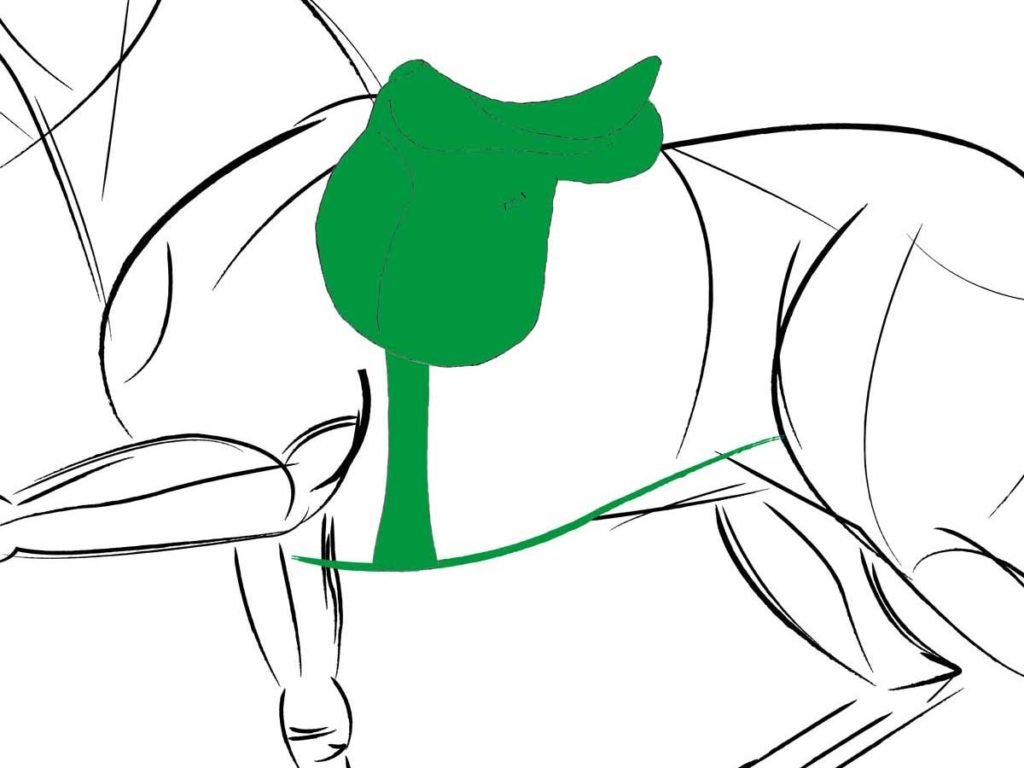
Horse type 2 = Symmetrical girth
In horse type 2, the line between the girth line and the end of the sternum runs straight. The girth line is well defined here. The saddle girth is positioned far enough away from the elbow.
The advantages of the symmetrical saddle girth
Symmetrical or anatomical saddle girths are among the most popular types. They provide the ideal conditions for fitting the saddle girth on Type 2 horses. The girth area is large enough here to allow the girth to be positioned far enough back.
Thanks to an almost straight sternum, the pressure is not transferred forwards from the rear edge of the saddle girth, but is automatically distributed across the entire chest plate. This ensures an even distribution of pressure points.
Please note: As already mentioned in relation to horse type 1, types 1 and 2 are often confused.
Our most popular symmetrical saddle girths:
Would you like to discover our full range of belts?
Horse type 3 = Moon-shaped girth
Horse type 3 is characterised by a rounded build and a broad ribcage with a narrow chest. The girth line is tilted sharply forwards, and there is no straight section.
A saddle girth that is straight would lose its grip on this type of horse and be pushed forwards by the broad rib cage.
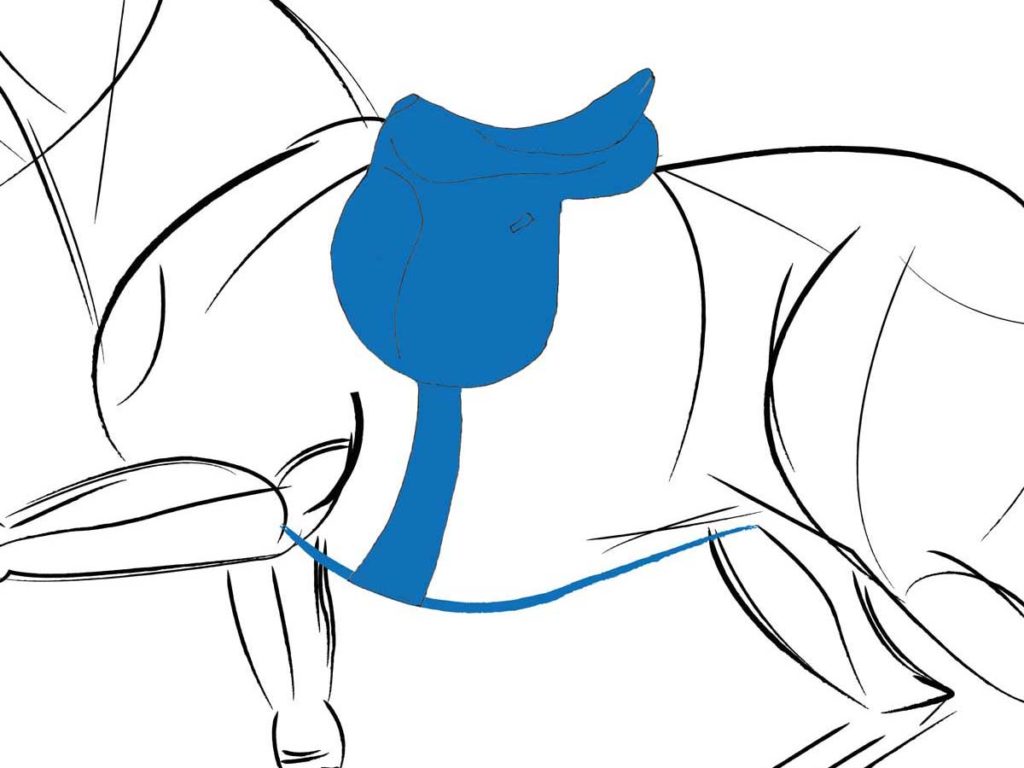
The advantages of the crescent-shaped saddle girth
Horse type 3 requires a girth that curves forwards. A crescent-shaped saddle girth, combined with an anatomical cut-out at the front edge of the girth, ensures sufficient freedom of movement in this case. The crescent shape, so to speak, works in harmony with the horse’s conformation rather than against it.
Our most popular moon-shaped saddle girths:
Would you like to discover our full range of belts?
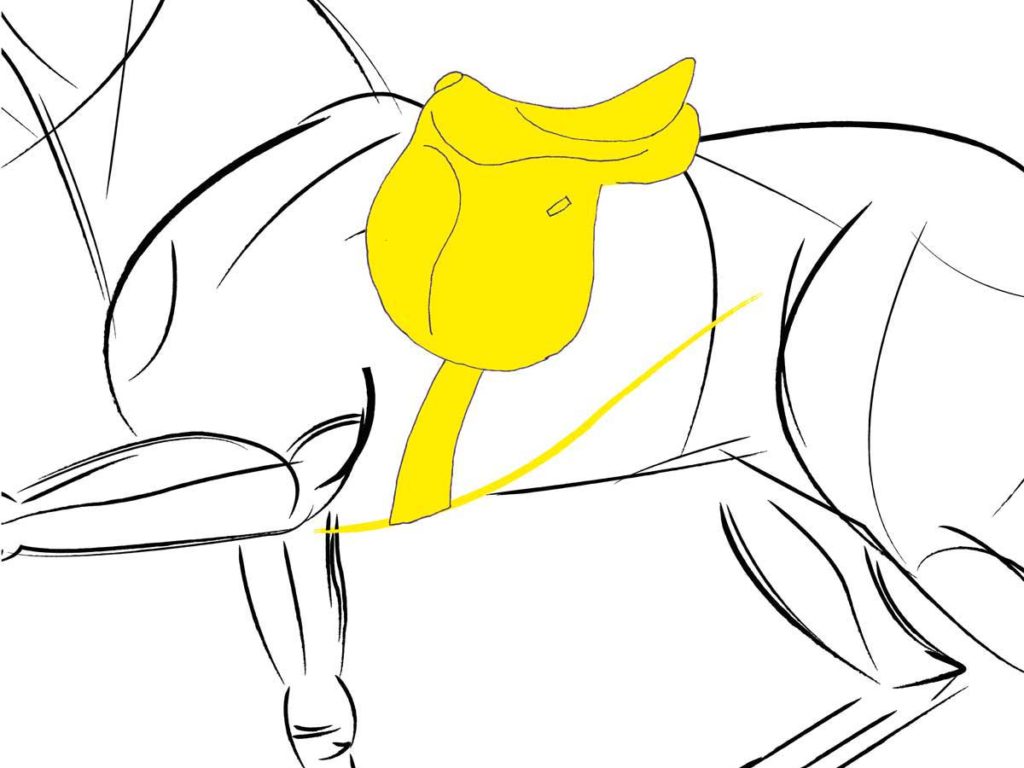
Horse type 4 = Athletic girth
Horse type 4 is characterised by its wedge-shaped build with a steeply sloping ribcage.
As with horse types 1 and 3, the girth does not lie straight here either; however, rather than tilting downwards as in horse type 3, the breastbone tilts upwards. There is a risk that the saddle girth will press against the breastbone at the rear.
The benefits of the athletic saddle girth
The rib arch on this type of horse, which curves distinctly upwards and backwards, means that the girth must also follow this curve. The overall curve of the athletic saddle girth, which is shaped to slope backwards, meets this requirement and makes it the ideal choice for horse type 4.
This design is more common in racing, which is why saddle straps of this type are not often seen.
Would you like to discover our full range of belts?
Horses are unique creatures with a wide variety of physical characteristics. If we use an unsuitable girth, we risk restricting our four-legged friend’s movement or even causing them pain. We therefore urge you to carry out thorough research before purchasing a girth and to base your choice on the horse’s specific build. In this way, we can ensure that we provide our equine companion with the best possible support.
Furthermore, we also say that it doesn’t always have to be complicated. If a standard (non-anatomical) girth is available and the horse has sufficient freedom of movement, shows no sensitivity to pressure and appears completely content, then the ‘simple’ girth can continue to be used. After all, the more complex the design of a saddle girth, the more likely it is to give rise to other issues, such as uneven girthing, an incorrect breastplate width, and so on.
In Part 4, the final instalment of our series on saddle girths, we’ll tell you about the different materials used for saddle girths …
… and how they differ.